












Sustainability Buzzwords: Breaking Down Recyclable, Biodegradable and Compostable Claims
Buying coffee and tea in compostable pods, eating with biodegradable plasticware and wiping down their morning mess with paper towels made from recycled paper ... Purchasing things with these labels make consumers feel better about their choices, but sometimes, what they’re buying may not be as eco-friendly as they think.
When it comes to products and packaging, the world of green claims can be unclear and confusing. Although navigating through it is a challenge, it’s an important challenge to take on for two reasons: you want to maintain a reputation of honesty and clear communication and prevent your consumers from feeling confused or deceived.
To help you navigate, we’ll break down the three biggest claims we deal with, all of which are involved in new green claims legislation being adopted worldwide.
Contents
- Pressure to be“green”
- Defining the terms
- Evaluating the standards for making green claims
- Considerations for using the terms:
- Main takeaways
Why sustainability claims matter: the pressure to be "green"
Brands are aiming to showcase sustainability on their product packaging, vying for consumers to pick them. We surveyed consumers in nine different countries across five continents, and all agreed that recyclability and biodegradability are the two most important when it comes to the claims featured on product packaging.1 In addition:
- 66% of consumers and 75% of millennial consumers consider sustainability when making a purchase (McKinsey & Co).
- Products making ESG-related claims averaged more growth in a five-year period compared to products making no ESG-related claims.
- More than half of consumers are willing to pay more for eco-friendly packaging.
True, paper is produced from the renewable fiber that comes from trees and other plants, and therefore, by its very nature, it’s biodegradable and compostable. However, packaging manufacturing processes can add substances like ink, coatings and adhesives to meet a brand’s design or use requirements, which can change substrates and impact end-of-life claims.
This is why we follow a stringent evaluation process before applying green claims ourselves. Here’s some of what we consider before making these claims.
Defining biodegradable, compostable and recyclable
First, when evaluating sustainable product claims, it’s important to understand what the terms mean. Most know what “recyclable” means. However, a survey of American consumers found that almost half have trouble distinguishing between the terms “compostable” and “biodegradable.”
If something is compostable, it’s usually biodegradable (although, there are exceptions). But if it’s biodegradable, that doesn’t mean it’s also compostable. It’s also important to understand the difference between something that’s industrially compostable or home compostable.
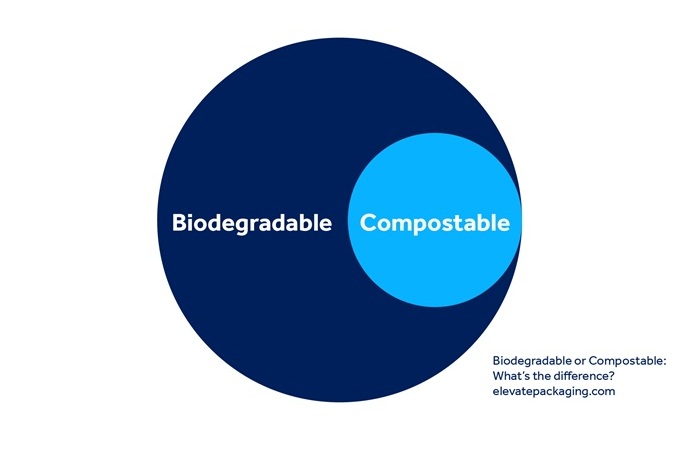
By definition, biodegradable material can be broken down and consumed by microorganisms. The time it takes for something to biodegrade is dependent on environmental conditions and the physical and chemical makeup of the material. Optimal conditions for biodegradation require the presence of warm temperatures, moisture and oxygen. Biodegradation slows down when a material is in soil, water, cold temps and/or dry climates.
If an item is “industrially compostable,” it means that it requires an industrial composting facility for the material to break down successfully. Industrial facilities are specifically designed for composting mostly food and food-related packaging to create a nutrient-rich product that can later be used as a soil amendment for agriculture.
Right now, when products are described as “compostable,” it typically means they’re industrially compostable. In order to make that claim, businesses will get that product or packaging certified as compostable through a third party, such as BPI.
If an item is compostable at home, it means people can dispose of it in their home composts where it should eventually break down. According to the FTC, those who want to claim something is compostable need “competent and reliable scientific evidence” that all materials in the product or package will break down into usable compost safely and in a reasonable amount of time.
When it comes to recyclability, most of us know that items are recyclable if they can be collected, processed and repurposed into new products. But what’s important to note is that just because an item can technically be recycled, doesn’t mean that it will be.
Material Recovery Facilities (MRFs) don’t accept all items that are technically recyclable. For this reason, we at Smurfit Westrock try to clarify when packaging is “curbside” (or kerbside) recyclable.

Evaluating the various standards for making green claims
Globally, there are nations and regions that have adopted green claims laws, some have adopted guidelines, and areas with no governance tend to follow guidelines set forth by neighboring regions. However, regulations concerning green claims are increasing.
In the U.S., the Federal Trade Commission (FTC) set forth “Green Guides” for businesses’ use of sustainability claims. These are guidelines aimed at helping businesses understand when environmental claims regarding their products could be misleading. Some examples of how companies should use these terms:
- Compostable Claims: Must be backed by scientific evidence showing the material will break down in an industrial composting facility within the same timeframe as the materials with which it is composted.
- Biodegradable Claims: May be made if the material will completely decompose within a year after customary disposal. It is deceptive to make a degradability claim for items that will most likely end up in landfills, incinerators or recycling facilities.
- Recyclable Claims: Should be qualified if less than 60% of consumers have access to recycling facilities that will accept the material.
Although the Green Guides are guidelines are not laws, the FTC can levy enforcement actions on a business that makes deceptive green claims. Still, one of the greatest risks to brands that make unsubstantiated green claims is to reputation. If a brand is called out for misleading package labeling and accused of greenwashing, the public backlash could cost a business more than any potential regulatory fines.
Some states in the U.S. have adopted their own laws to counter greenwashing. Certain states, like California, have already set regulations on the use of these terms. California even had success in enforcing laws, imposing hefty fines on businesses that violate them.
In Europe, new laws governing the use of sustainability buzzwords will soon go into effect. The EU Parliament approved the proposal of a new Green Claims Directive aimed at greenwashing in early 2024, and once it’s adopted, member states will most likely have a two-year period to put the directive into place and enforce it.
Under the proposed directive, companies will not be able to claim something is compostable or biodegradable without proof or specificity. They’ll also need third-party certifications to verify the claim.
Australia is another country with green claims standards. Singapore is in the process of forming new guidelines and third-party organizations in Brazil are making efforts to educate businesses about global standards.
Considerations for using recyclable, compostable or biodegradable
End-of-life processes are scientific and complex; numerous variables and conditions go into determining an item’s level of degradability and/or recyclability. This is what a blanket buzzword fails to convey to consumers, which is why regulations regarding green claims are growing worldwide.
These regulations typically give brands guidelines for “how” to use each of the green claims, usually encouraging consumer brands to be specific about the conditions needed for something to be recyclable or biodegradable. Here are some questions thoughtful brands can ask before adding these claims to product packaging in order to understand what language needs to accompany them.
Recyclability
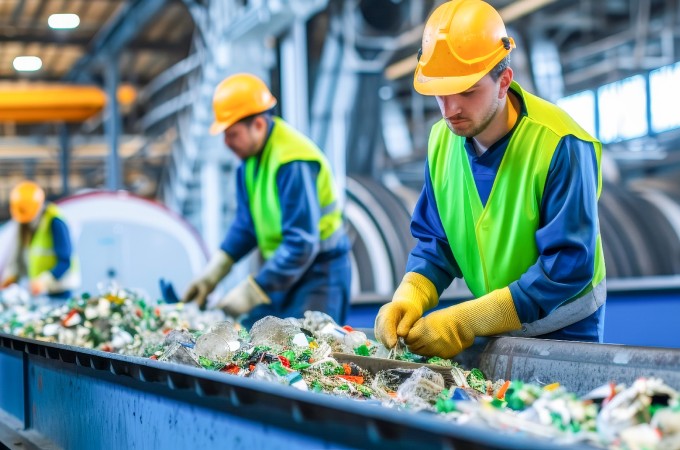
The greatest concept we need to understand when it comes to recyclability is that a product can be “technically” recyclable, meaning that specific material is capable of being recycled and turned into something else, but that does not determine if it will be recycled.
Current guidelines dictate that it’s misleading to claim an item is recyclable if it’s not likely to be recycled. To evaluate the likelihood of recyclability, we consider the following:
Can the item be processed in a typical recycling facility? According to various guides worldwide, including the U.S. FTC’s Green Guides, a product’s ability to be recycled is typically assessed by whether it’s “curbside” (or kerbside) recyclable. This means a majority of consumers (At least 60% per the FTC, but some regions require a higher percentage) will be able to put the item in a recycling bin for it to be recycled at their local MRF.
Even if an item is technically recyclable, not all MRFs can process it. Some items, like shrink film and plastic produce punnets, for instance, can jam or slip through machinery, and some materials may not be recovered efficiently.
If a brand’s goal is for its packaging to be recyclable, then our packaging experts and materials scientists can offer paper-based packaging options with that end goal in mind. They also assess the packaging’s recyclability by running tests at the Smurfit Westrock Innovation lab in Richmond, VA.
What is the consumer’s responsibility? Does the consumer need to rinse or break down the item to ensure it's recyclable? MRFs typically don’t want recycling waste with food remnants because that can attract pests. Additionally, some items may not be able to be processed by machinery unless they’re disassembled. Including recycling instructions on packaging may be needed to increase the likelihood that that packaging will be recycled.
What is the market demand? The existence of a market for recycled materials also affects recyclability. Recyclable items are only valuable if there is demand for the end product. If there’s a demand, then after it’s collected and sorted, it can be transferred to an organization that wants it for recycling.
This is the largest issue with plastic recovery—it's cheaper to make more plastic than it is to recycle it, which limits the market for recovering plastic. Luckily, there’s higher demand for paper-based substrates, which is why it’s recovered at such a high rate.

Biodegradability
What environment is needed for the item to degrade? The rate of biodegradation is highly dependent on the environment since oxygen levels and microbial activity are important factors in the process. Biodegradation on land differs from biodegradation in water, composting facilities or in landfills. Not all materials will biodegrade at an acceptable rate in all of these environments.
This is why claims of biodegradability can be meaningless and misleading unless they’re qualified with more specific information. Since our goal is also to make sure consumers put paper-based packaging in their recycling bins so we can recover it, we also tend to focus on recyclability.
How long will the substrate take to degrade? The FTC Green Guides stipulate that for a product to be labeled as biodegradable, it must break down within a "reasonably short period," typically within a year. Keep in mind that environmental conditions will impact the length of time it takes for a substrate to biodegrade. For example, conditions in a landfill or in a body of water will slow down biodegradation.
Is it likely for your item to end up in a landfill? This is important to know because agencies providing certification or standards and governing bodies putting forth legislation are stipulating that products bound for landfills should not be labeled as biodegradable. As stated above, landfills are not environments that provide proper conditions for biodegradation. This is another reason why claims like these need to be clarified and qualified with additional language. Consumers may need to understand how to dispose of an item, or that it will only be biodegradable in certain environments.

Compostability
Can it go in a home compost, or does it need an industrial facility? Most compostable packaging requires an industrial composting facility, which maintains high temperatures and controlled conditions that ensure oxygenation and sufficient microbial conditions. Home composting setups, while beneficial, usually can't achieve the same efficiency.
If it needs a facility, do consumers have access? Accessibility to composting facilities is limited. Only about 27 percent of Americans have access to some form of composting service, as opposed to over 90 percent of Canadians, and Europeans fall slightly above those in the U.S. This disparity makes it challenging to label products as universally compostable, because even if it’s certified as compostable, if consumers don’t have access, the product is most likely to end up in a landfill anyway.
Can the item be certified? Third party certifications ensure materials meet stringent compostability standards. Certified products must break down alongside food scraps in industrial composting facilities without harming compost quality.
While certification helps instill consumer trust, it comes at a cost and involves a lengthy process that can take months, which brands should keep in mind. Before going through the lengthy certification process, producers often complete thorough testing with their packaging provider. The process can be worth it as compostable packaging products labeled “compostable" are shown to increase the collection of food and other organic waste materials, diverting these materials from landfills.
Since some of your paperboard products are compostable, does that mean my packaging will be too? We provide substrates that are curbside recyclable and some of our packaging has even been certified as compostable. Note that when paperboard is designed into a package, it’s now a different product that will require certification of its own.
Sounds complicated. What are my main takeaways?
As a packaging provider steeped in sustainability, we know your struggle. Once our packaging experts understand your goals, they can help you determine what forms of packaging can help you meet your sustainability goals. They can even help attain third-party certifications.
Overall, here’s what you should keep in mind through your sustainability journey:
- Be transparent. Clearly communicate the conditions under which a product is recyclable, biodegradable or compostable. Avoid broad, unqualified claims.
- Educate your audience. Let your consumers know how to properly dispose of packaging and products to ensure they are recycled or composted.
- Work with a responsible packaging partner. If your packaging partner is responsible with its sustainability practices and messaging, then it’ll be clear about the green claims on its packaging. The right supplier can also help you get the proof or certification you need to make specific claims.
- Be open to innovation. Our innovation team invests in research and development to create packaging that meets sustainability standards without compromising functionality. Our innovators will often create products specifically for our customers and then work with them to launch these products in the marketplace. Participating in launching new innovative and sustainable packaging will help you with your sustainability goals and bring greater sustainability to your industry.
Contact our team to get started.
1Smurfit Westrock, Ranked Around the World: Exploring which packaging sustainability claims matter most to consumers, July 2024
Our Latest Blogs