












Top Retail Trends of 2026: What to Expect

With 2025 now in the rearview mirror, manufacturers and retailers have set their sights on 2026 in what’s shaping up to be another unpredictable year. While the immense growth of AI use might be the only thing guaranteed for 2026, just like the market, it will also require retailers and suppliers to remain agile as they shape retail priorities for the year.
Seeing the potential to streamline business, retailers have quickly adopted AI applications. 87% of retailers have already deployed AI tech in at least one area of business, and 60% of retail companies are planning to increase spend on AI. This only makes sense as it complements the industry's current focus on ecommerce, which is expected to grow from $6.4 trillion in total sales in 2025 to $7.9 trillion by 2028.
The success of AI in retail is contributing to additional market volatility as consumers remain concerned about a soon-to-burst AI bubble, which would particularly impact the top third of shoppers—the same ones who are keeping the economy going. In November, the global volatility index (VIX) that measures the market’s 30-day expectation of volatility for the S&P 500 hit 26.3, its highest point since U.S. tariff announcements caused it to surge past 50 in April. (The average hovers around 20.) As many tariffs remain in place, so does the volatility.
Considering these and other factors, our resident retail expert, Leon Nicholas, VP of retail insights and solutions at Smurfit Westrock, generated his list of top retail trends for 2026. In addition to the trends, he shares how they will impact packaging and merchandising priorities in the new year.
1. Manufacturers and retailers will double-down on tariff mitigation strategies
Number one on this list is no surprise, as it seems to be the greatest part of any conversation about the global marketplace. While the U.S. administration has been quietly rolling back tariffs on some grocery items, many remain in place and could be re-imposed without much warning.
Though tariffs have been largely absorbed by manufacturers and retailers to date, Goldman Sachs claims that around 55% of them will be absorbed by consumers moving forward. That will leave retailers and manufacturers to absorb or mitigate 45% of tariff costs.
“Retailers are going to push back on manufacturers; manufacturers will in turn push back on raw goods suppliers or find new sources, and so on,” said Nicholas. “So, layers of mitigation will be at play, with all involved trying to determine where they can apply pressure to other players to bear the burden. AI will likely be increasingly used to optimize supply chains.”

What this means for packaging
Packaging providers will play a critical role by leveraging both sustainable supply chain optimization and expertise in ecosystem efficiency. “Smart” palletization, eliminating void space with right-size packaging, and redesigning packaging to use less material will be critical drivers for cost reduction. Experienced supply chain analysts can evaluate supply chains for opportunities that generate greater efficiency, reduce costs and lower carbon emissions.
2. Consumers will seek to offset the impact of tariffs

Consumers will try to manage the 55% of tariff costs left to them, which Goldman Sachs suggests may rise to as much as 70% by the end of the year. With most consumers already feeling the pinch from inflation, Nicholas says they will continue to “trade down” or “trade out” when it comes to purchasing behavior.
“It’s more expensive to eat out, so instead of doing that, shoppers will trade down, or opt for the frozen pizza category instead, perhaps favoring the premium varieties, as those can be cheaper than eating out. They may cut back on fresh vegetables, but they’ll buy more frozen to compensate,” Nicholas said.
Affluent consumers will choose to buy more bulk products. This is good news for membership clubs like Costco and Sam’s Club, which have seen a surge in growth thanks to rising costs. Costco membership fee income rose an astonishing 14% in its fiscal 2025 year. Consumers with less, however, will trade out, meaning they’ll choose not to purchase or purchase smaller quantities when they can afford to spend the money.
What this means for packaging
“Displays and shelf merchandising will matter more because brands have to work harder to convey the value proposition to shoppers trading down or out,” Nicholas explained.
Thematic and stylistic consistency among primary packaging, retail ready packaging and display signage is one way to drive visibility across in-store media. In addition, brand or attribute blocking on shelves can maximize conversion by driving shopper efficiency. Toward this end, our ShelfViewer software performs analyses of on-shelf packaging design and determines where consumers are focusing their attention. Our display team also leverages AI-powered software to benchmark the effectiveness of a display design against thousands of other designs.
3. Established brands must pivot under pressure from emerging brands and private label growth
Consumers are showing they prefer what’s innovative with their wallets. A majority of product innovation is concentrated among emerging brands; while those brands account for less than 2% of market share in their categories, they achieved 39% of category growth in 2024, up from 17% in 2023. 2025 data will likely show even greater impact.
“We continue to see enormous growth coming from emerging brands that bring differentiation, engagement, authenticity, and a bit of pizzazz. Sometimes even irreverence,” said Nicholas.
At the same time, retailers continue to launch more affordable private-label alternatives at the other end of the price spectrum. Private label sales are projected to reach $277 billion by the end of 2025, surpassing the 2024 record of $271 billion. Private brands are increasingly launching new flavor profiles well beyond their reputation for “one-off” variations. Walmart’s launch of BetterGoods, its largest private brand food launch in 20 years, illustrates this trend.
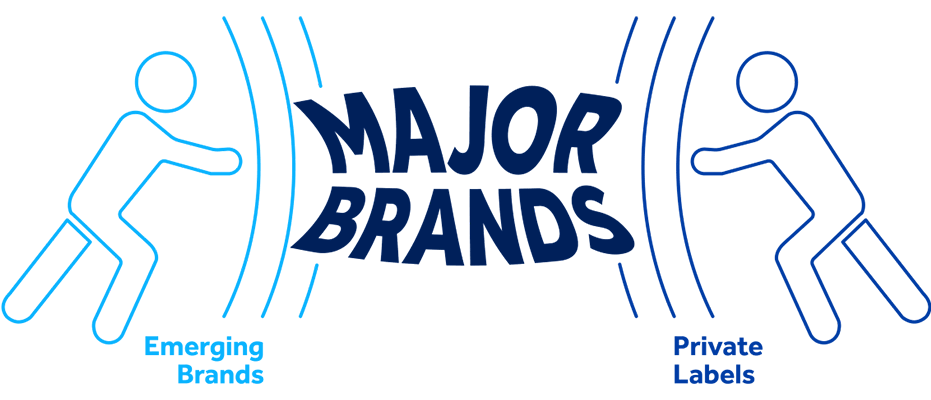
In response to consumer demand for innovation, some established brands are adopting a responsive “challenger mindset.” For example, after Taylor Swift spoke about putting sprinkles in her sourdough bread recipe, Pillsbury responded by releasing a limited-edition Funfetti bread mix. It sold out in minutes, and boxes are even for sale on eBay for $25.
“Established brands must operationalize an agile innovation mindset so that they can launch a new product in short order, versus operating with the lengthy testing process that many brands have in place today,” he added. “AI will only take you so far if you can’t operationalize the innovation.”
What this means for packaging
Agility is the name of the game. Packaging providers need to be able to meet demands from emerging brands, private labels, and large-brand innovators in an accelerated fashion. Development and design teams that can offer rapid prototyping and production in the context of high-impact design will win.
Our Design2Market teams specialize in rapid packaging redesigns in a matter of weeks. Additionally, thanks to a dedicated packaging design team and digital die-cutter, healthcare and pharmaceutical brands can walk into our dedicated healthcare plant with an idea and walk out with a first run of their packaging the same day.
4. Brick & mortar merchandising will stay strong but evolve with greater co-equity merchandising
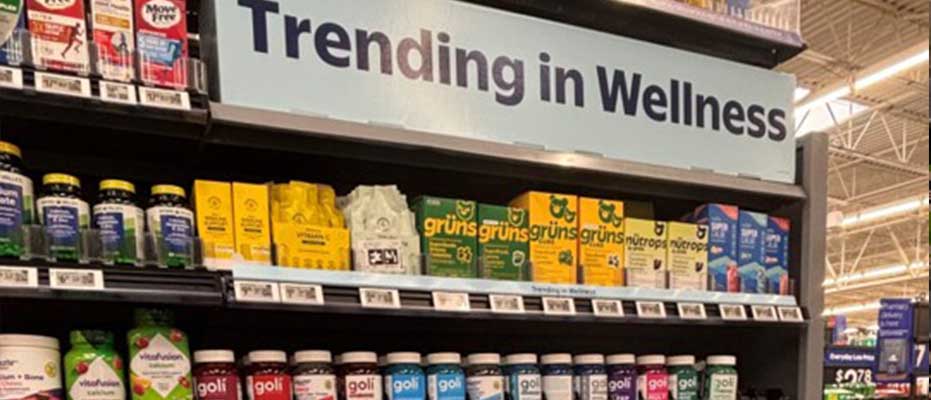
While ecommerce continues to grow at a faster pace than brick & mortar, around 80% of all shopping still takes place in a physical store; even by 2030, Kantar forecasts that stores will maintain a 76% share of sales.
However, the power of brick and mortar will not eliminate the need for merchandising to evolve. A new level of in-store merchandising is emerging, emphasizing co-equity drivers that will vary by retailer.
“Each retailer will need to assess growth and profitability by category for the three types of brands today: private labels, emerging brands and established brands,” added Nicholas. “This will go beyond traditional category management; it brings the merchandising power and branding rights of these different sources into consideration.”
As retailers play into shopper desires, shopper decision trees will determine a retailer’s profit architecture and drive shelf merchandising going forward. Think of shelf sections dedicated to emerging brands, or whole aisles dedicated to private label products.
At the same time, displays will align more closely with retailers’ increasingly assertive brand propositions, especially for core categories. This will require alignment with retailer marketing themes and taglines in ways that may challenge traditional brands. Candid, data-driven, co-equity conversations will be on the merchandising agenda in the coming year.
What this means for packaging
Insights-driven packaging and display design will extend beyond traditional demographic and attribute analyses to increasingly incorporate a broader framework around equity and conversion power. How can packaging design aid in attaining shelf space in store that has a section labeled “Trending?” Packaging providers with this level of shopper and retailer strategy insights will rise to the forefront in this environment.
Smurfit Westrock leverages a vast portfolio of primary, secondary and AI-driven insight tools not only to drive design innovation, but also to craft a brand narrative tailored to the equity conversation.
5. Manufacturers will further increase focus on three retail giants
Kantar reports that Walmart, Amazon and Costco combined will account for a third of all U.S. retail sales and 32% of all U.S. online spending in 2025 for the retail chains they track. Kantar expects these same retailers to generate 57% of all retail growth through 2030. The message is clear: Retail scale and growth in this region will be concentrated among three powerful players.
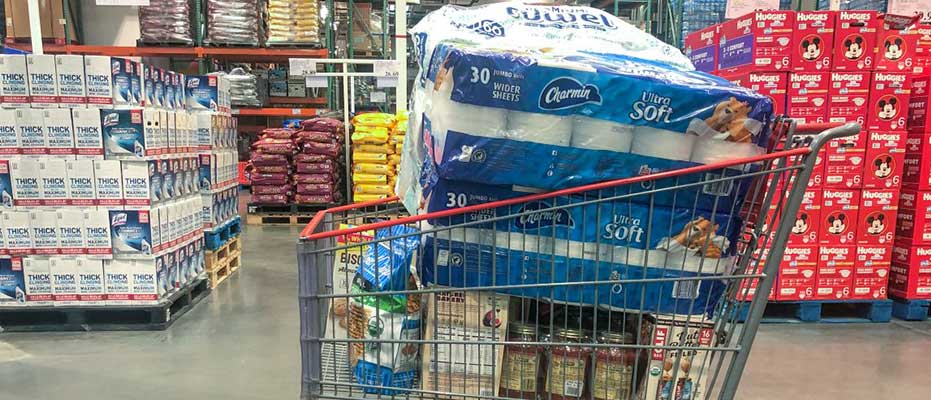
At the same time, all three use very different commerce models, each requiring unique approaches for brands wanting to gain access to their marketplaces.
“Your company must have deep domain expertise in each of these three retailers, leveraging different components of your architecture to align with them,” said Nicholas. “Depending on the retailer, manufacturers must uniquely emphasize AI-optimized media, ecommerce packaging specifications, custom display or just plain price reduction.”
What this means for packaging
Leading packaging suppliers should provide you with expertise on the go-to-market strategies of these retailers and how they are manifested in their respective shelf, display, sustainability and ecommerce requirements. In-store merchandising rules at Walmart and Costco are nuanced; ecommerce requirements for all three players also vary considerably. Rely on the seasoning of experts to guide your execution.
6. Connected packaging will broaden its reach

First, it was a “nice-to-have.” Then came RFID mandates from retailers like Walmart. In 2026, connected packaging will start to incorporate AI tools not only to drive supply chain efficiencies, but also to track circularity, guide purchase decisions, and serve as a shopper portal to deeper marketing engagement.
As connected surfaces multiply, manufacturers and retailers will now be able to capitalize on their investments to support supply chain efficiencies, relying more heavily on real-time traceability. For example, electronic shelf labels (ESLs) will communicate with smart packaging to indicate inventory levels, which can then inform online shoppers about product availability before placing their orders. Connected surfaces will also educate shoppers about how they can recycle products and drive sustainability scorecard accountability for manufacturers and retailers alike. Additionally, we’ll see more use of connected packaging to market to shoppers in dynamic ways.
“If a shopper on dietary restrictions passes by a connected display that engages their mobile device, an AI agent can remind the shopper to monitor certain ingredients and further notify them when scanning the package. The shopper’s agent will guide the purchases in collaboration with smart surfaces,” said Nicholas.
What this means for packaging
Over the next several years, manufacturers should operate on the assumption that all packaging and displays will be connected. Supply chain tracking and display compliance alone will demand it.
In addition, if AI provides a useful recipe for customer engagement, then connected surfaces are a necessary ingredient. Use of shopper, retailer and manufacturer agents requires smart surfaces. Packaging providers must be able to accommodate brands’ and retailers’ need for packaging to act as an interactive portals.
7. Sustainability commitments will deepen

While the topic isn’t as urgent to current U.S. leaders, commitment across the world has only grown. Consumer demand is increasing steadily, as are regulations requiring sustainability and transparency from producers globally. As a result, sustainability will remain critical to manufacturers, retailers and shoppers in 2026, and, if anything, deepen their commitments.
"In some cases, the goals have become stricter when you consider extended producer responsibility (EPR) laws in places like California and Europe. The complexity has, therefore, increased,” added Nicholas.
Furthermore, shoppers, especially in the Millennial and Gen Z generations, express a preference for transparent brands that prioritize sustainability. Not coincidentally, emerging brands’ success with providing greater sustainability further drives share growth among those groups.
What this means for packaging
Packaging providers must commit to renewable and recyclable options, especially alternatives to plastic packaging, as more regulations against single-use plastics are enacted. Alignment with retailer and supplier scorecards will become more important as both brands and retailers double-down on achieving 2030 commitments.
2026 Retail Trends Recap
As we prepare for an unpredictable 2026, keep these principles in mind:
Operationalize agility across your company.
Brands with the ability to execute quickly with packaging and merchandising innovation—and rapidly adjust to tariff volatility and EPR complexity—will gain market share.
Leverage smart surfaces to feed AI applications.
Connected packaging and merchandising will drive both efficiency and shopper engagement as smart surfaces become portals for engagement, drivers of supply chain efficiencies and “feeders” of AI models.
Lean on packaging providers for supply chain consultation.
Packaging experts have specific knowledge about materials science, the latest in packaging innovation and capabilities in automation. They can find areas for improvement that internal supply chain generalists may not see, improvements which could help mitigate tariffs.
Optimize packaging designs and displays for maximum engagement in-store.
Thematic consistency, effective shelf merchandising and branding power will manifest across packaging and in-store displays more dynamically in the year ahead.


Frequently asked questions
Our Latest Blogs