











How you can use packaging to attain circularity and meet sustainability targets
How can we make our packaging more sustainable?
What packaging alternatives do you provide that could replace our plastic packaging?
Can you make sure our packaging is recyclable?
Is there a way we can lower the carbon footprint of our packaging?
How can we use less material for our packaging?
... All great questions we’re asked on the regular. With consumer pressure, growing legislation in some regions, and pressure to meet the requirement of the EU Green Deal, many businesses are trying to achieve more circularity and meet sustainability targets, especially as we approach 2030.
Consumers are putting the greatest pressure on brands, using their purchasing power to demand greater responsibility. A sign that Gen Z has had a major influence on their elders, nearly 90 percent of Gen X consumers said they’re willing to spend an extra 10 percent or more for sustainable products. That number was up from 34 percent in the same study just two years prior.
As your business shifts to address these new consumer expectations, there are always ways you can improve sustainability through your packaging. Here are some of the most common changes our customers choose to make when we’re helping them to meet their sustainability goals.
1. Make a change in the packaging substrate
If your packaging consists of or contains material that isn’t recyclable, then you can increase sustainability by changing the substrate. The greatest example of this is eliminating or reducing single-use plastic packaging by choosing other substrates that are more widely recycled, like paper, glass or metal.
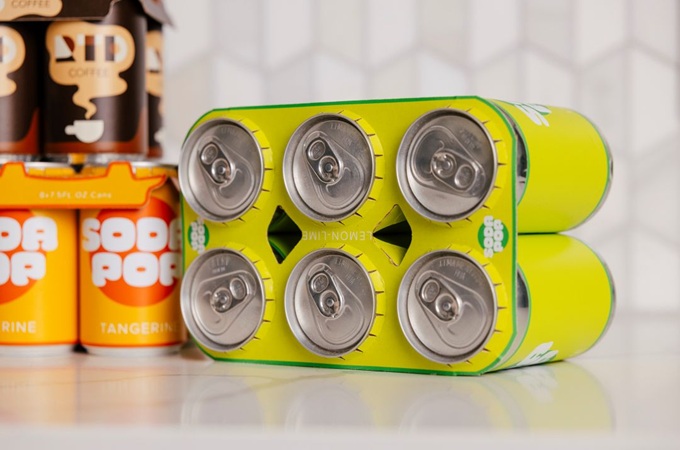
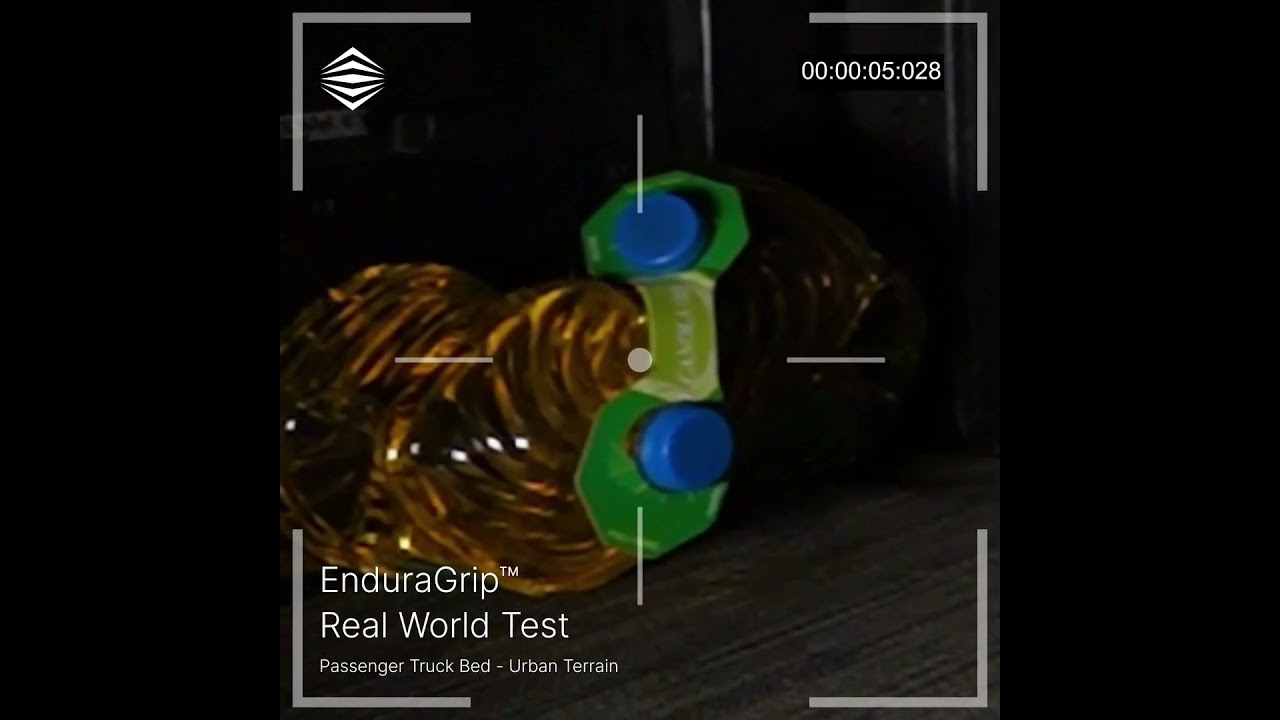
There are numerous ways we’ve helped our customers design plastic out of their packaging by creating paper-based alternatives. Many are surprised by how versatile and durable paper innovations can be. For example, the Smurfit Westrock team worked with Costco to create a paper-based handle strong enough to replace the plastic ones used to group products like olive oil and fruit juice.
“We noticed people were picking up the products more delicately, as if the handle might break, but they don’t have to do that,” said Juan Carlos Palacios, packaging design manager, Smurfit Westrock. “They were made to handle the same needs as the plastic handles, so they won’t break if people handle the bundled products in the same way they’re used to doing it.”
Smurfit Westrock EnduraGrip
When it comes to paper-based packaging, many make the false assumption that using 100 percent recycled paperboard is more sustainable. However, our experts recommend using a combination of virgin and recycled fiber. Fiber can only be recycled a certain number of times before it’s unusable, so infusions of virgin wood fiber are necessary to maintain the paper cycle. Virgin wood fiber is also a renewable resource when there’s a focus on responsible forestry.
If you already use paper-based packaging, the way you can increase sustainability by changing the substrate is to use less fiber. Recent developments that have led to greater strength and durability of paperboard mean that you may be able to choose a lighter weight of paperboard while still maintaining proper protection for your products. Smurfit Westrock designers know the capabilities and limitations of various weights and can run tests to ensure a lower weight will provide adequate protection.
2. Redesign the packaging with circularity in mind
If you’re already using paper-based packaging, there may be ways you can redesign your packaging to be more sustainable. Packaging can be redesigned to use less fiber, but there are also ways packages can be redesigned to produce less material waste during the conversion process.
In our work with Brazilian sandal maker Grendene, we redesigned the company’s shoe boxes to increase their sustainability and lower costs. The new packaging design used less fiber, lowering materials costs as well as packaging weight, which helps to lower shipping costs.
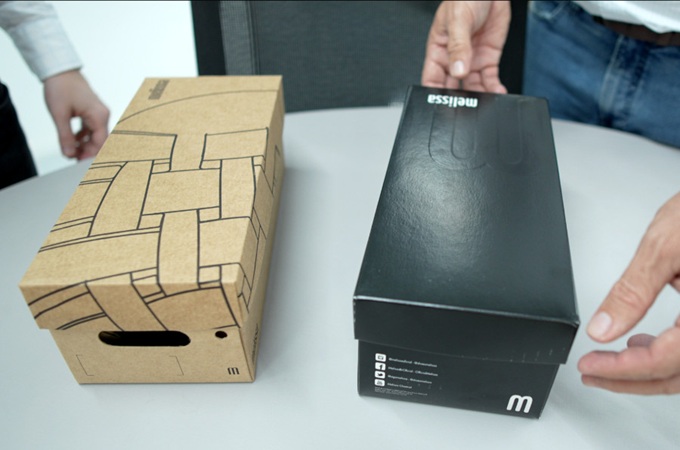
Grendene’s new shoe boxes use unbleached kraft paperboard, which is recyclable and provides a natural look. Some premium packaging products use coatings that can interfere with recyclability. So, opting for a substrate with a more sustainable coating or without a coating at all can ensure your packaging is recyclable, and therefore circular.
Besides the box itself, the graphics can also be redesigned to be more sustainable. Certain printing inks may render a package unable to be recycled, but there are inks, including some decorative printing inks, that won’t interfere with a package’s recyclability.
Additionally, using a minimalist design with less ink can also lead to using less energy in the production process. To determine the impact all of these changes would make, suppliers often perform lifecycle analyses on their packaging that measure the resulting carbon emissions, energy and water usage, shipping and logistics costs and package recovery for recycling.
3. Close loops with better packaging recovery
Designing packaging that’s sustainable is often not enough—just because a package is recyclable or compostable doesn’t mean it WILL be recycled or composted. Therefore, one of the best ways to increase your circularity is to increase the recovery rate of your packaging, the amount that other people will recycle it.
First, you can work with your packaging provider to make sure your packaging qualifies as “curbside (kerbside) recyclable.” Your provider should be able to run recyclability tests on your packaging and should also understand the typical recycling limitations of most materials recycling facilities (MRFs). Smurfit Westrock has its own pilot plant in North America, so many repulpability tests can be run without the need to work with a third-party facility.
You can also work with your supplier to recover packaging material. If you’re using an automated solution such as a box former, you may have leftover packaging material from the forming process. Your packaging supplier may be able to help you devise a system to collect leftover packaging material and transport it to an MRF.
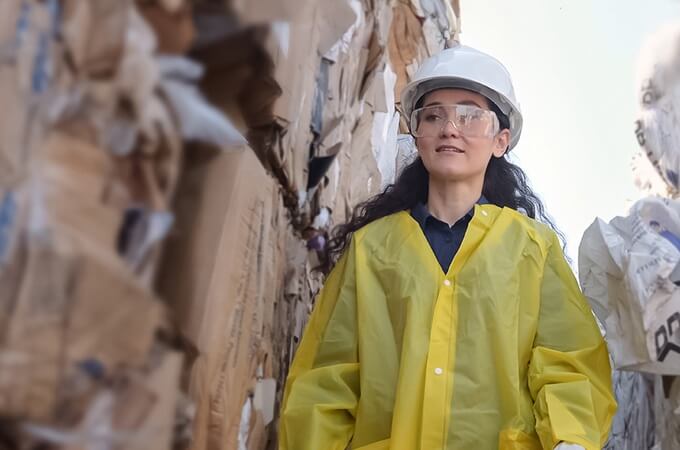
If you’re unable to make your packaging curbside recyclable, you can take advantage of systems like reverse vending. Reverse vending has gained in popularity in recent years providing consumers another convenient way to recycle packaging, typically beverage packaging. You can still use the same principle for paper-based packaging by:
- Setting up drop-off locations to collect your packaging.
- Making sure your locations are convenient for your consumers, such as choosing places they frequent or places where your product is purchased.
- Work with your packaging supplier to recover the returns and recycle the packaging (or reuse it).
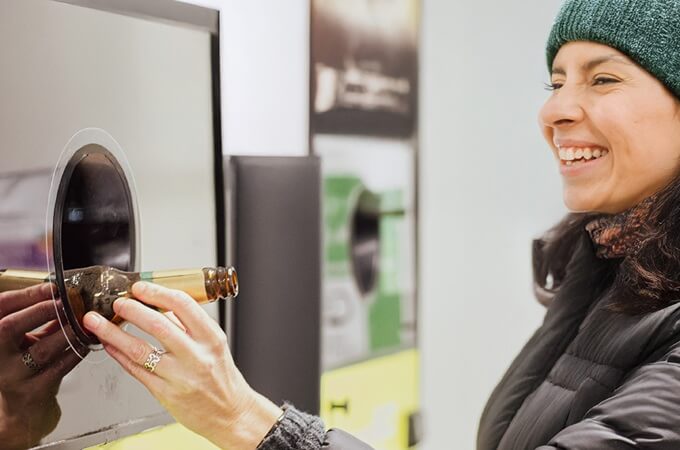
Finally, there are some things you can do to make recycling easy for your consumers and increase the likelihood that they will put your packaging in a recycling bin or return it:
- Educate your consumer by including recycling instructions on your packaging.
- Inform customers with clear labeling. For example, in the U.S., becoming a How2Recycle member could help with this. You can also print QR codes that link to instructions or how-to videos encouraging consumers to recycle.
- Offer consumers incentives or recognition for recycling or using reverse vending machines.
Many who’ve taken advantage of reverse vending will give consumers discounts on future purchases when they return their packaging, which increases customer loyalty as well as recycling. Consumers could also display their recycling efforts in social media posts in exchange for chances to win merch, receive discounts or get recognition.
4. Right-size your packaging
Have you ever gotten a large box delivered to your door only to open it and find a much smaller item inside surrounded by air-filled plastic pouches? If that seems wasteful, that’s probably because it is. Right-sized packaging not only reduces material waste, but it also may indirectly reduce transportation and shipping-related costs and emissions.It’s not hard to see that smaller boxes equal less use of corrugated or paperboard material. And when those boxes are only packaging your products and not a lot of air around your products, that means you’ll be able to fit more boxes within the volume area of a truck or container.
“When you think about the fact that air can take up as much as 64 percent of a shipping container, you realize there’s a lot you can do to increase sustainability and lower costs,” said Leon Nicholas, Smurfit Westrock VP of retail insights and solutions. “So, retailers are looking to improve their end-to-end density.”
Additionally, since right-sized boxes don’t package a lot of air, they also balance better and are less susceptible to crushing. That means you can increase “stack-ability,” or how high you can stack your boxes on a pallet or in a truck. The more boxes you can load on a truck or pallet, the fewer trucks you’ll need, making shipping and transportation more efficient and hopefully, lowering your overall transportation emissions.
Your product packaging can be designed to be right-sized, but when shipping your products, you can also make sure your secondary packaging is right-sized. That’s easy to do with packaging automation that recognizes various product SKUs and then forms boxes around products based on their sizes and dimensions.
5. Improve packaging logistics
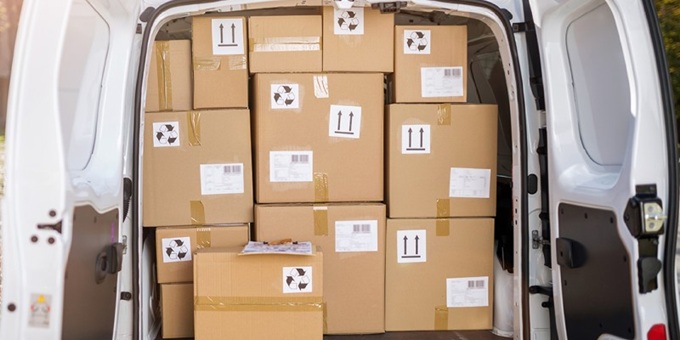
If your packaging provider has a broad geographical footprint like Smurfit Westrock, it may be able to improve your logistics. We typically do this by leveraging our various locations as well as using tracking technology.
For example, Smurfit Westrock Account Lead Matt Galdes was able to help a major food service provider improve their costs by utilizing more of our conversion plant locations. Instead of having all of their boxes converted at one plant and then shipping them across the country to all of their nationwide food service locations, he was able to spread it out. With plants in multiple regions converting their boxes, they were able to ship to the food service locations within their region, cutting down on shipping costs.
Additionally, tagging packages with RFID technology is proven to reduce shrinkage and waste. With improved tracking, less pallets and shipments are lost, and when it comes to food products, managers are better able to use a “first-in-first-out" system to minimize the risk of spoilage. Eventually, RFID tech can even be used later in the lifecycle to track how much packaging is being recycled by your consumers.
6. Make sure your provider has appropriate certifications and understands compliance in your industry
Working with the right packaging provider can make a difference when trying to meet sustainability goals. First, it’s important to have a provider that understands how to comply with packaging regulations in your area, and also in the areas where you’re operating.
Different regions have different requirements for packaging with regard to the environment and safety, such as regulations for food packaging. The right packaging provider should already be familiar with the compliance regulations you’re trying to meet in the regions where you operate, which means their team will understand how to design packaging that will meet your compliance needs.

Next, to ensure you have a sustainable supply chain, it’s important that your provider holds sustainability certifications within its own industry. Smurfit Westrock is committed to responsible forestry. Our fiber supply is chain-of-custody-certified and all our forestland is FSC- or FSC/PEFC-certified, important indicators of a healthy supply chain in the paper-based packaging industry.
Finally, having a packaging partner with its own sustainability goals will be an asset if you plan to report your Scope 3 emissions. When a company already tracks its own data, that will go a long way to helping you understand the emissions related to your supply chain and transportation.
Be open to innovating at every stage
When you find the right packaging partner willing to look at your packaging and all processes involved, they might come up with an idea that’s outside the norm and that might require some development. Innovation is key to continuing to improve sustainability, so be open to taking some risks with your packaging, which is where you might find the greatest improvements.
Our innovators have helped many of our partners make sustainability gains with new designs, coatings or processes. Contact our team to explore the possibilities.
Frequently asked questions
Our Latest Blogs