












The top retail industry trends of 2025: what retailers and suppliers need to know

Inflation and ongoing economic pressure are on the minds of consumers. Though inflation has diminished, prices haven’t returned to anything close to pre-pandemic levels, resulting in consumer frustration and hardship. While all shoppers are seeking deals, more of those at the lower income levels are needing help to make ends meet, as evidenced by an increase in demand at local food pantries.
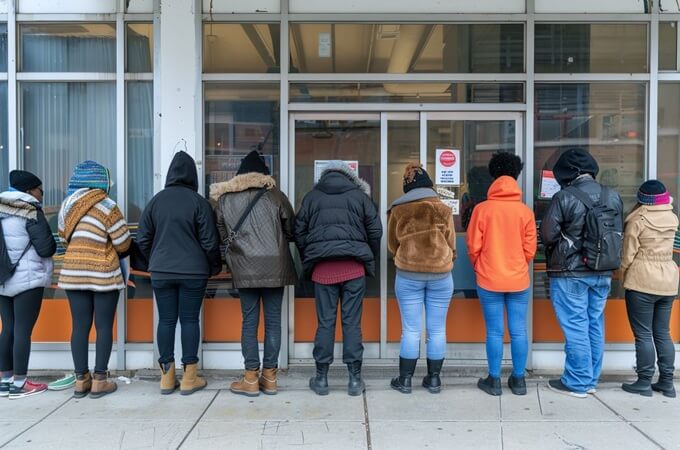
Walmart President and CEO Doug McMillon recently stated that he believes food inflation will remain constant in 2025, saying he’s particularly disappointed at the current level of food inflation, especially for staples like eggs and dairy. Food-at-home prices have seen a staggering 25 percent increase compared to pre-pandemic levels, as reported by FMI – The Food Industry Association.
The frustration with inflated prices is so influential that it was a key deciding factor in the U.S. 2024 election. Though with a change in administration, the retail sector is preparing for the potential impact. Speculation about potential increases in tariffs on imports—including a 60 percent tariff on Chinese goods and 10 to 20 percent on other imports—raises questions about supply chain disruptions and cost impacts for both businesses and consumers.
The one constant has been the growth of E-commerce. Global e-commerce sales were forecasted to reach $6.09 trillion by the end of 2024. This marked an 8.4 percent annual increase, setting the stage for an even greater expansion to $6.56 trillion in 2025. This growth solidifies e-commerce as the dominant force shaping the retail industry.
With these factors heavily shaping the retail landscape going into 2025, Smurfit Westrock’s vice president of retail insights & solutions, Leon Nicholas, has identified six trends we’ll experience across the landscape this year. We’ll break them down for you as well as how retailers and their manufacturer suppliers can respond to achieve success.
2025 key retail trends: the current landscape
Customers require value ... but in different ways.
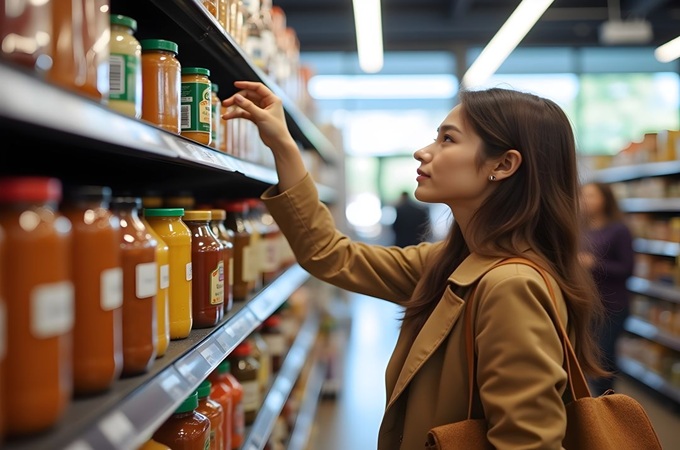
U.S. consumers are frugal (understatement), with only 68 percent of US respondents in November making at least one splurge purchase to treat themselves, down from 82% a year ago. While all shoppers are purchasing more wisely and looking for more value, Nicholas says they’re mostly divided into two camps.
“If the value equation is defined as what people get (numerator) over what they pay (denominator), then today we have a big distinction between ‘numerator shoppers’ and ‘denominator shoppers,’” said Nicholas. “Both demand value, but with different emphases. Numerator shoppers in the value equation are focused more on what they're getting. They're actually OK with paying more if what they get represents innovation, or if it offers better unit pricing. The denominator shoppers, roughly three-quarters of them, just want to pay less money. They’ve been hit hard by inflation, and they haven’t recovered their buying power.”
Mondelez International has seen their customers trading down to smaller package sizes in both Biscuits and Chocolates. The snack giant is also seeing a significant shift in sales to club stores, dollar stores and emerging e-commerce platforms as customers alter purchasing behavior based on their economic circumstances.
Shoppers have all changed their habits by making trade-offs, purchasing goods and services differently based on which camp they’re in. Denominator shoppers are trading down by doing things like grocery shopping at Walmart instead of the major grocer in town, buying more private labels or shopping for apparel at TJ Maxx instead of Macy’s. At the same time, numerator shoppers may eat out less, buying premium grocery items at clubs or stores instead.

The retail space is polarized; functional products are dominating.
Just as there is polarization in terms of value perceptions, categories themselves are experiencing polarization. Just under half (42 percent) of consumers are prioritizing spending on experiences rather than possessions, according to Paysafe research. Additionally, functional products are winning out over discretionary items. Therefore, retailers known for functional purchases are winning, while others are losing market share.
For example: As a discount retailer of life’s everyday items, Walmart's Q3 comparable sales were up 5.3 percent, and e-commerce comp sales were up 22 percent in the U.S. On the other hand, Target is known for its emphasis on discretionary purchases, and its comparable sales were up only 0.3 percent in Q3, while operating income was down 11 percent.
Leveraging non-tangibles is a financial priority.
There is one area where retailers are finding growth: leveraging services rather than physical products, such as fulfillment services in operations and membership programs for shoppers.

E-commerce retailers can drive productivity through warehousing, bundling, shipping, and other value-added services through fulfillment centers. The demand for e-commerce fulfillment services is being driven by the rise of e-commerce across the globe and the rise in the number of people shopping online, particularly in developing economies. The global e-commerce fulfillment services market size is expected to grow at a rate of 10.4 percent during the forecast period (2022–2032).
The subscription, membership, and loyalty sector is booming, with the industry valued at an estimated $3 trillion in 2024, up from $2 trillion in 2023. Traditional retail purchase transactions are still happening, but now a majority of global consumers hold retail subscriptions, putting pressure on brands to align with retailer programs as part of their promotional portfolios.
A recent retail report from Deloitte found that consumers with retail subscriptions value spending less time on purchases, even if 69 percent of those with such subscriptions say they spend more money. 41 percent of consumers now use food, grocery, and beverage subscription services – making it the most popular digital subscription category across all industries and sectors.
Private label growth will continue.
Private labels are continuing to play a significant role in retail strategies, showing consistent growth over recent years. Almost one in five consumer goods products in the United States are now a private label, and U.S. market share for private labels increased from 17.7 percent in 2019 to close to 19 percent by 2023.

“Most recently, we’re seeing growth in private labels in general merchandise categories, especially from retailers like Walmart and Home Depot, where they've upgraded their general merchandise private labels and they’re now providing a growing contribution to both top and bottom lines,” said Nicholas.
Consumers looking for “affordable sustainability” are turning to private label goods to keep grocery costs down (those “denominator” shoppers). In a 2024 study by Progressive Grocer, more than half of consumers (57 percent) believed private label brands offer above-average value for their price point.
At the same time, a number of retailers’ private labels are pursuing a premium image, often at higher prices compared to national brands (Walmart’s bettergoods line or Publix’s GreenWise). “Numerator” shoppers want in on the private label phenomenon too, it seems.
Retailers are back to pre-pandemic inventory patterns.
The challenging logistics of the last few years led retailers to stock up on inventory, having experienced the negative effects of just-in-time inventory policies during COVID. However, those days are definitely in the past.
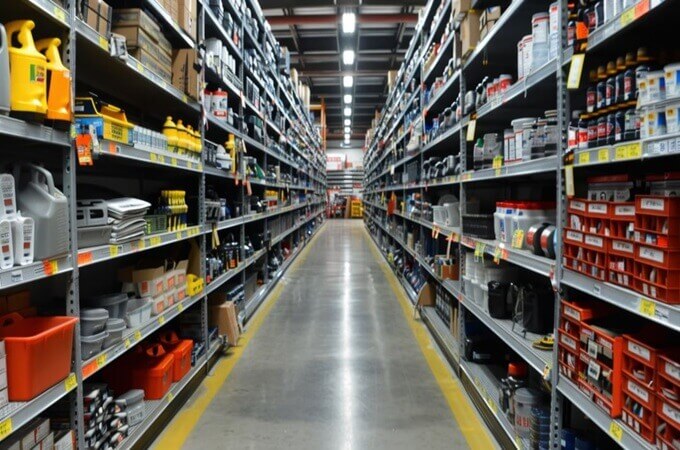
Retailers have again slimmed down their inventories, which not only saves on storage costs but also releases working capital that can be invested elsewhere. Advanced technologies such as RFID tracking, automated ordering systems and precise demand forecasting are making lean inventories both practical and profitable. As just one example, Walmart U.S. inventory levels declined 0.6 percent in the last quarter, despite mid-single-digit comp growth.
“Walmart U.S. inventory down 0.6 percent in a 5.3 comp environment without any measurable out-of-stock issues is nothing short of amazing. I can't emphasize enough how well Walmart is performing right now,” said Nicholas.
E-commerce and mobile are powering growth.
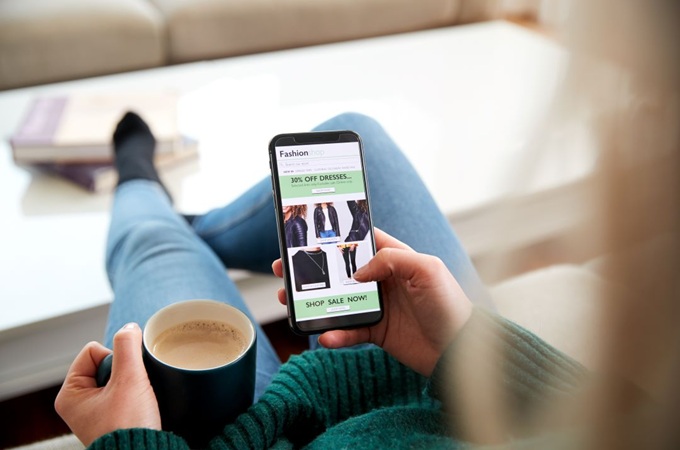
The days of shoppers’ pitching tents outside of a Best Buy on Thanksgiving night are likely in the past. Black Friday in 2024 saw more online sales than ever, according to Adobe Analytics: $10.8 billion in U.S. sales alone, up 10.2 percent over last year. In contrast, brick-and-mortar sales were down 8 percent.
In 2023, retail E-commerce sales comprised 19.9 percent of total sales in the U.S. and are expected to reach 20.5 percent in 2024, according to Kantar Retail. Additionally, since mobile E-commerce adds to the convenience of online shopping, it’s fast becoming consumers’ preferred shopping channel. 60 percent of American adults stated that mobile shopping is a necessity for online shopping convenience.
3 ways to succeed in 2025 and how packaging can help
With the consumer landscape so polarized and the future of the economy uncertain, retailers and suppliers can adapt to succeed. Nicholas notes that the winning retailers today are all excelling in three areas: value, convenience and shopper experience. A stellar packaging partner can help with all three of these.
1. Deliver value with precision.
According to Nicholas, around a quarter of consumers are willing to spend more if they get more, while three-quarters are looking simply to spend less. Brands need to use packaging and display graphics to convey the value these consumers are looking for with precision, depending on where their core shoppers are in the value equation.
Displays and shelf merchandising (including RRPs) can make price ladders more visible to shoppers, enabling them to “find themselves” among category assortments. QR codes can also allow customers to connect to brand websites or retailers’ media networks to learn more about a product’s value proposition. Additionally, packaging is a portal that can be used to create personalized promotions for shoppers. Through scanning, shoppers can access personalized deals from loyalty programs.
For upper-income shoppers, the value proposition needs to be conveyed through unit price economics, creative graphics, and sustainable packaging materials. It’s important to emphasize “what you get” through sustainable packaging, membership programs and new product innovation. When it comes to packaging, one way brands can offer greater sustainability for the cost of the product is by using less packaging or a lower weight of paperboard.
2. Offer exceptional convenience.
The convenience requirement for shoppers is simple: Get more done in less time. With online providing both ease and speed as the standard, the industry’s focus on convenience must include both packaging design and store merchandising.
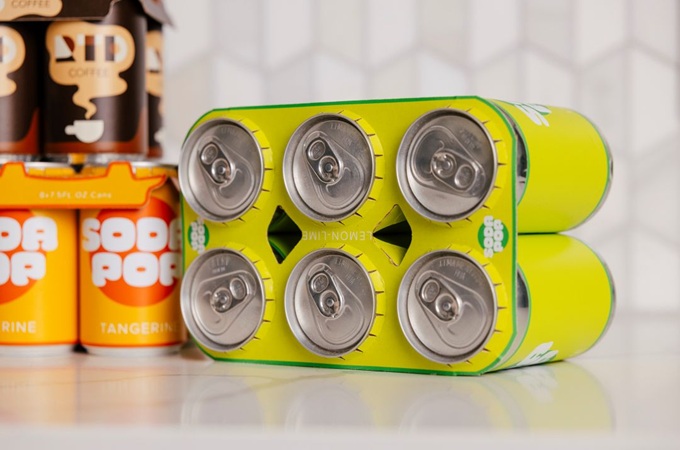
Thoughtful packaging design can make packages easier to open, reduce secondary packaging and deliver packaging that’s easily recyclable. Leveraging packaging automation and optimizing inventory management with intelligent tracking (RFID technology) can also increase speed to consumers, a critical requirement in the age of same-day delivery.
A store’s role in providing convenience is just as important. The need to provide online pick-up and return has never been greater. In addition, the importance of store design, signage and shelf merchandising, especially to enable de-selection in some areas and cross-merchandising in other areas, will be critical for in-store conversion. Watch for increased technology like smart carts to enable greater shopping efficiency, with connected packaging as a key enabler.
3. Create a compelling customer experience.
Experience has never been more important to brick & mortar performance. Product packaging has to work harder to drive shelf conversion, leveraging graphics, color, and QR codes to stand out. Displays must serve as beacons, with graphic consistency and digital consistency. Additionally, sustainable display materials send a clear message to the values-centric, and often younger, shopper.
Expect store merchandising that leverages both the retailer’s and the brand’s unique equity drivers through co-promotions and collaborations. If tailored appropriately, this will help increase loyalty in a fragmented landscape.
A compelling experience extends to e-commerce packaging as well, through an enhanced unboxing experience with more thoughtful and intentional packaging design. You can engage the customer’s senses through decorative printing techniques that add aroma, catch the eye with sparkle or give the illusion of motion. Creating interactivity through QR codes and augmented reality (AR) can create immersive and memorable experiences that captivate customers and leave a lasting impression.
Wrapping up 2025
Between shifting consumer priorities, inflationary pressures, and rapid e-commerce growth, the path to success requires adaptability and a sharp focus on what matters most—value, convenience, and exceptional shopper experiences. Whether it’s communicating value through innovative packaging, making shopping more seamless with mobile experiences, or building loyalty through engaging packaging and in-store merchandising, there are many opportunities to win in this polarized market.
Contact our team today to explore how we can help your brand seize the moment, increase efficiency, and deepen connections with your customers.
Our Latest Blogs