




Hitting a manufacturing milestone on the path to net zero
After Smurfit Kappa and Westrock merged in 2024, the company needed new combined sustainability targets. What emerged over the next year were not only new targets but a Net Zero Transition Plan that mapped a path for the global company to get to net zero, with 2030 scope 1 and 2 emissions targets in alignment with the Paris Agreement.
Over 80% of global companies either kept or accelerated their climate commitments over the last year, and more companies are increasing their ambitions than decreasing them, according to the PwC 2026 State of Decarbonization Report. While the U.S. rolled back legislation and cut funding for climate change initiatives, global commitments to decarbonization remained, signaling the importance for companies to have a net zero target.
The industrial and manufacturing industry accounts for a quarter of all greenhouse gas emissions, meaning it plays a key role in decarbonizing the global economy. To play that role well, it must overcome some significant challenges, such as the high upfront investment in more sustainable infrastructure and the lack of availability of low-carbon energy sources, plus their high cost. Addressing the challenges and pacing forward, Smurfit Westrock recently hit a milestone in its journey to net zero—a milestone that will serve as a decarbonization blueprint for the organization moving forward.
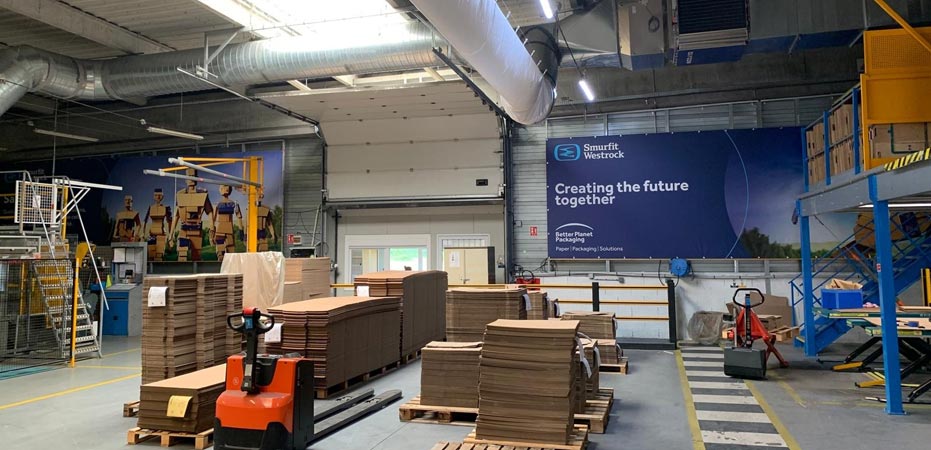
Bernard and team upgraded the Somica plant with adiabatic cooling, a new heat pump and electric forklifts.
Turning obsolescence into opportunity
With new targets in place, workers across the company are forming plans and making operational decisions, aiming to meet them. When Lionel Bernard, technical director for Smurfit Westrock France, and his team identified some smaller plants that needed upgrades, they saw it as an opportunity to make a push toward the company’s greater decarbonization goal.
“There were three sheet plants with heating systems that were not working properly and were obsolete,” said Bernard. “We knew we could replace them with new gas boilers or invest more in electric heat pumps, which we believed was the best long-term sustainable option. We then needed to convince the Group to make the larger investment.”
Bernard wondered what other upgrades could be made at each plant to eliminate emissions. He thought making the upgrades a part of a larger “net zero” project would make it a more worthwhile investment that aligned with the company’s goals and Net Zero Transition Plan. His team began taking inventory at each plant.
“We listed all the equipment that used fossil fuels at each plant: forklift trucks, plant heating, and sometimes office heating. In Somica, we even identified a floor cleaning machine that was running with LPG (liquid petroleum gas).”
Once Bernard realized the plants could be modernized while simultaneously eliminating their Scope 1 and Scope 2 emissions, he knew he had a compelling proposal to bring to the company.
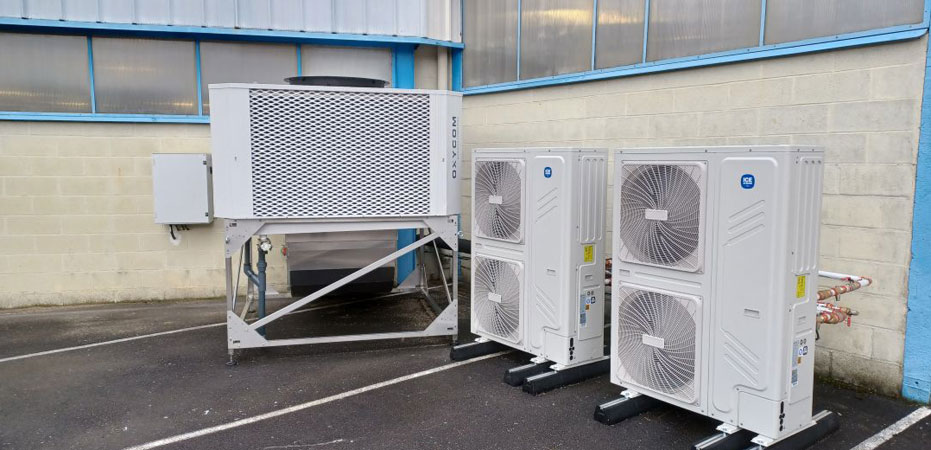
The new adiabatic cooling unit and heat pump at the Nord Emballages plant.
The strategy of upselling upgrades
Bernard’s team also identified that the Dore integrated plant, one that already had a biomass boiler, wouldn’t require much of an investment to eliminate emissions there, so he added it to his proposal.
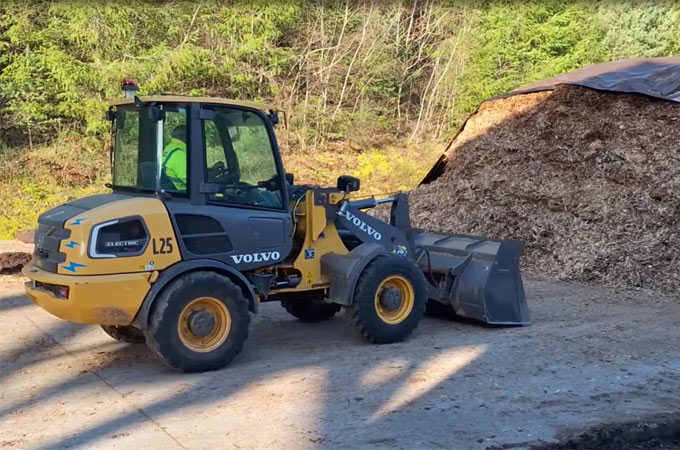
“The additional investment needed to bring this plant to net zero was relatively small. It was just to replace a special wood chip loader, and to install some small heat pumps in the office building,” Bernard said.
In total, he put together a proposal to upgrade four sites, eliminating their operational emissions: Dore, Distribution Vin, Nord Emballages and Somica. In addition to the minor upgrades at Dore, most sites would get new electric forklifts and Nord Emballages and Somica would get new high-efficiency heat pumps. The team would also pursue green certificates to show the plants operate using 100% renewable electricity.
As the team presented a compelling business case, they easily earned the approval to move forward with the project.
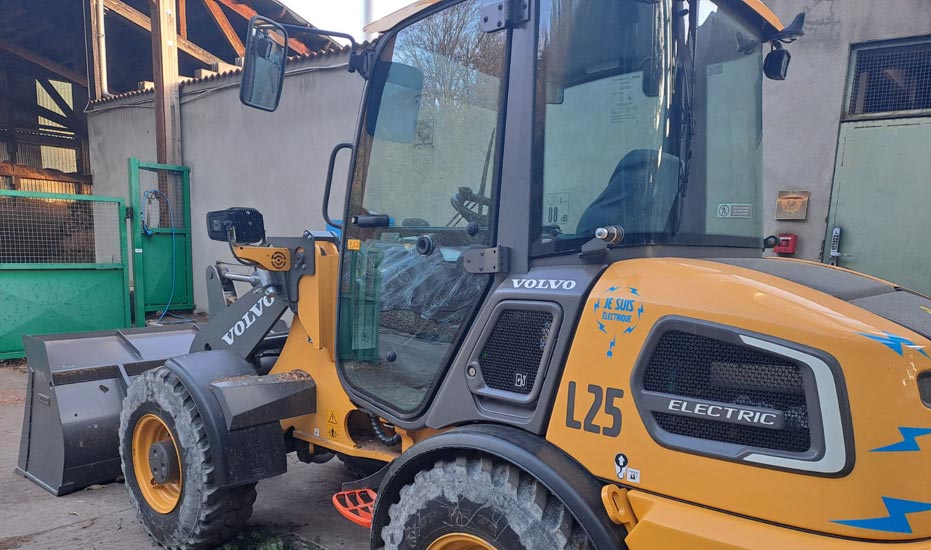
The new electric woodchip loader helped reduce emissions at the Dore plant.
Applying a common strategy in a new way
Once the upgrades were completed, Bernard and the central team presented the project to those in other regions of the company who recognized it as a scalable approach for gradually decarbonizing our sites.
“This is now a proof of concept,” said Wadi Portela, Europe Sustainability and Systems manager. “People in other regions said, ‘We have sites with a similar profile that also need heating upgrades. Rather than replacing like for like, we can invest a little more and make those facilities fully renewable.’”
With such high interest from other regions and plant managers, the team needed to map out a way to apply this method to additional sites. Like a decarbonization snowball, they decided to first knock out the smaller sites that require the fewest upgrades to transition to net zero, build momentum, and then move on to larger sites that would require more support.
“In Europe, we're expanding.” said Portela. “We have already completed another five sites and are aiming to transition around 20 sites to net zero in Scopes 1 and 2 emissions by the end of next year, focusing on smaller sites that already require investment. However, now we're also evaluating larger, integrated sites, where available government support through subsidies can help accelerate the transition.”
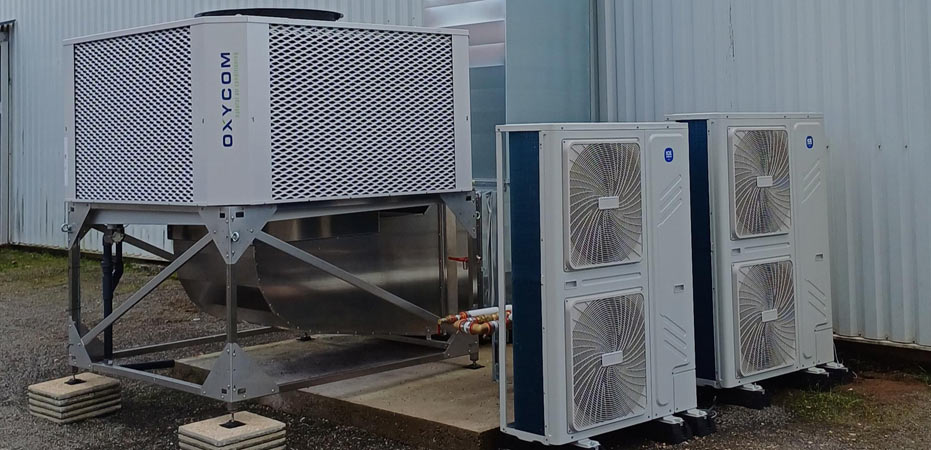
New adiabatic cooling and heat pump at the Somica plant.
The perks of site-by-site transition
In addition to serving as a proof of concept for similar projects across the business, the initiative has delivered commercial benefits at both local and regional levels. Since these plants primarily produce packaging for local customers, they can now demonstrate that their products are manufactured at net zero sites, strengthening customer conversations around sustainability and reinforcing Smurfit Westrock's position as a sustainability leader in the industry. Bernard and Portela say customers have responded positively to the initiative and believe that, as larger integrated sites follow, the impact will become even more significant.
To learn more about our Net Zero Transition Plan and other efforts to increase circularity, see our 2025 Sustainability Report.
Our Latest Blogs