



Recycled Fiber vs. Virgin Fiber: Building a Circular Economy
A common thought is that packaging made from 100% recycled material is the optimal choice. But in fact, the need for virgin fiber, or fresh material, is essential and also supports sustainability.
How virgin fiber complements recycled fiber
You can't have a sustainable, circular economy without a constant supply of high-quality virgin fiber enabling the existence of recycled fiber.
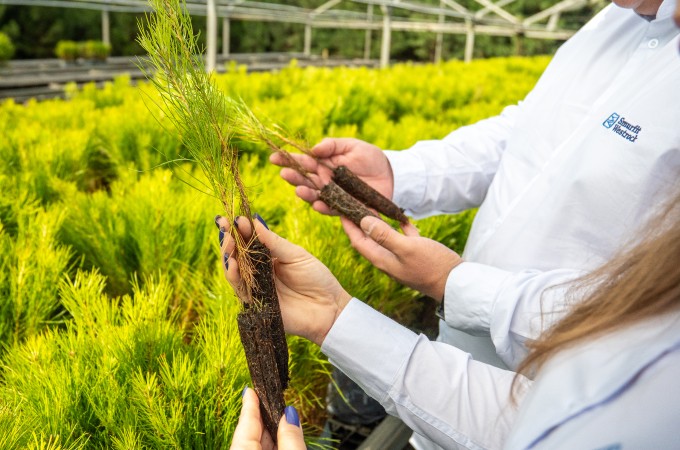
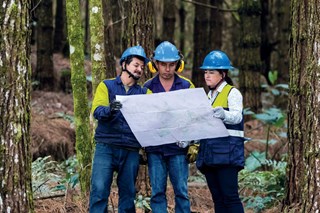
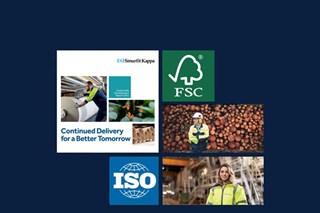
Smurfit Westrock's virgin fiber, or fiber not previously used to produce paper or packaging products, is sourced from responsibly managed forests. All of our forests are FSC- or PEFC-certified, and we also partner with small, private landowners to help them manage their forestland and acquire the proper forestry certification.
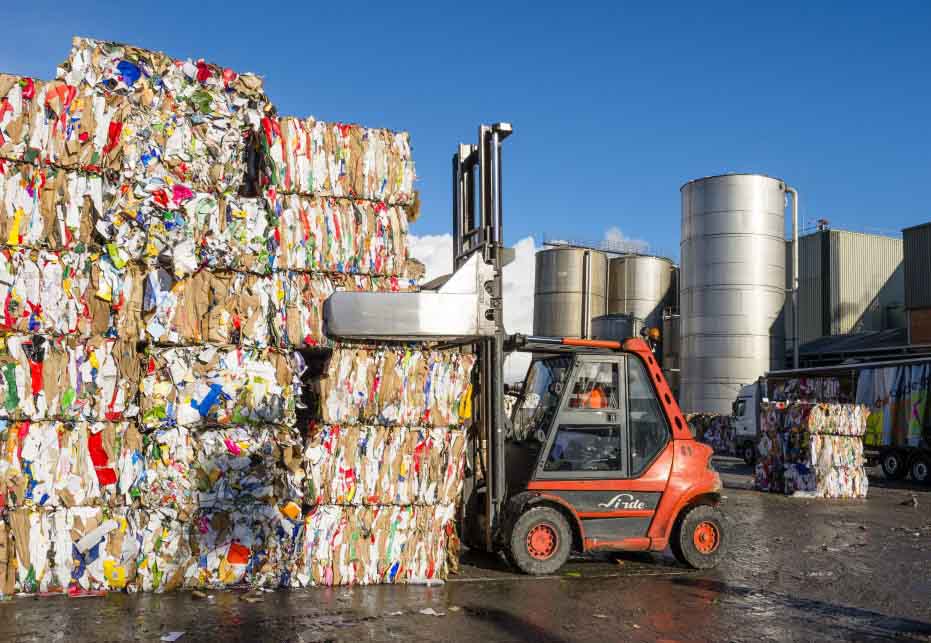
Alternatively, our recycled fiber comes from used paper and packaging collected through either our dedicated recycling plants or from partnerships with other materials recycling facilities. While it would be ideal to infinitely reuse fiber-based products, the reality is that the fibers in paper and packaging typically have a limited lifespan. A recent study shows fiber can be recycled as much as 25 times before it becomes unsuitable for use.
Each time recycled fiber is processed, the individual strands drop in quality and strength. Without adding fresh fiber into the mix, recycled paper and packaging would run out within a year, and that’s under maximum utilization rates.1 Therefore, virgin fiber remains vital to a sustainable, circular packaging operation.
Supply chain inefficiencies, shifting costs and transportation demands are also factors. Making an environmentally friendly packaging choice can’t be done simply by deciding between recycled or virgin sources. Instead, consider whether the decision makes sense for environmental objectives and whether the supplier supports sustainability throughout the papermaking process.
How virgin fiber benefits the circular economy
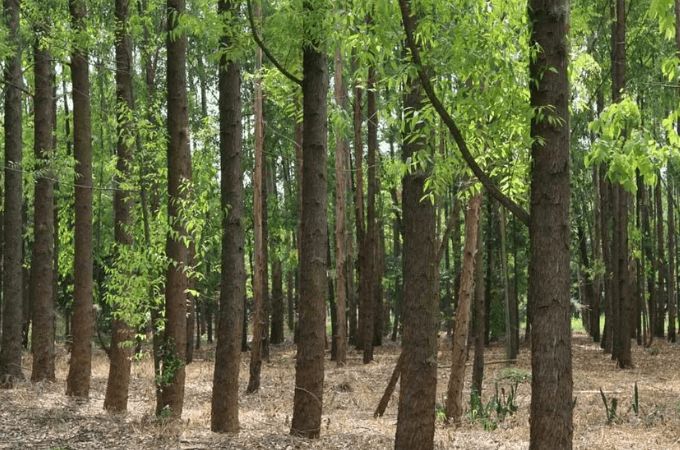
Sustainable forestry is at the heart of our operations. Planting trees, harvesting them at the right time and converting them into responsible forest products are important to maintain healthy forestlands and biodiversity. We also guard against deforestation to protect the environment and maintain biodiversity and balanced ecosystems.
Flourishing sustainable forests confer significant ecological benefits alongside virgin fiber production. Sustainable forests can directly contribute to:
- Clean water
- Wildlife diversity
- Carbon sequestration
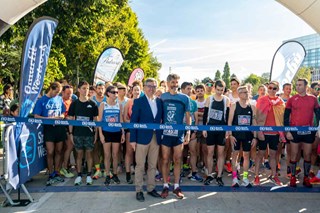
- Recreation: Forests often serve as vibrant recreation areas for local communities, and Smurfit Westrock has invested in providing access to urban greenspaces.
Beyond these upsides, responsibly harvesting forests is also good for the landscape's long-term health. When a forest becomes overcrowded with trees, the lack of space, water and sunlight means the canopy and understory struggle to achieve productive growth. Without virgin fiber harvesting, maximizing regeneration and biodiversity in forested environments can be difficult, and fire hazards can also arise.
How we're driving fiber-based innovation
Virgin fiber is essential to a sustainable, circular economy. Smurfit Westrock's forestry practices help to ensure these resources achieve the most benefit:- Through collaborative relationships with landowners in the U.S. and abroad, we provide extensive education, guidance and support for sustainable forest management.
- We create economic incentives for these private landowners and family tree farmers to continue using their land for working forests, ensuring these vast regions provide crucial carbon sequestration, freshwater supplies and diverse habitats.
- We're driving innovation through smarter fiber-based packaging solutions and closed-loop programs alongside sustainable partnerships with companies like Costco, Bobo's and Benefit Cosmetics.
Reducing waste and emissions with collaborative ideas
Smurfit Westrock partners with the world's leading companies to deliver packaging solutions that carefully consider natural resources and enhance our response to the changing marketplace as well as consumer interests.We helped support Kraft-Heinz sustainability goals and better reflect consumer demand by developing a recyclable paperboard sleeve for its multi-can products. This no-glue innovation uses 50% less material than a traditional wraparound box while reducing CO2 emissions by 18.7% compared to the equivalent shrink-wrap design.2
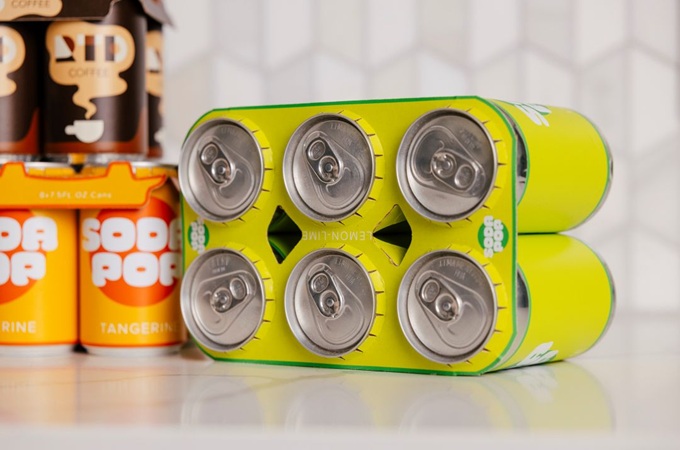
Similarly, we partnered with iconic Mexican brewer Grupo Modelo on implementing CanCollar® – a paperboard-based alternative to plastic rings for beverage multipacks. Durable enough to withstand the moist conditions inside a brewery, this forward-thinking design is expected to reduce plastic waste by more than 100 tons annually.3
Developing closed-loop systems with General Motors
Commercial operations are also vital to the recycling process, with the right approach helping to ensure natural resources are used to their maximum potential. Smurfit Westrock recently helped General Motors establish a closed-loop recyclable virgin fiber packaging system, highlighting how virgin and recycled sources work together to produce sustainable outcomes.
As a one-stop supplier and recycling partner, we produce specially designed fiber-based products for General Motors and pick up and move into our mill system almost 17,000 tons of recyclable material per year across just five of GM’s plants.
With the reclaimed virgin materials soon beginning a new life as recycled products, this program also supported GM’s Zero Waste goal to divert greater than 90% of their operational waste from landfills and thermal processing facilities by 2025. Smurfit Westrock is honored to support its customers’ progress toward their sustainability goals while creating less waste and enabling a circular paper-based economy.
How to choose the right fiber mix
Smurfit Westrock offers a diverse range of packaging options including those that use 100% recycled fiber. A range of questions can help businesses select sustainable packaging that also achieve business objectives and fulfills environmental needs:
- Know what's driving the need: Consider the reasons for choosing a fully recycled product. From customer expectations to industry standards, motivation might determine which product makes the most sense.
- Consider the intended use: Recycled paper-based products can be a great choice but the intended application matters. Strength and durability demands influence the ideal packaging decision.
- Explore options: While many of Smurfit Westrock's products are 100% recyclable, others feature a combination of virgin and recycled fiber to improve longevity and performance. Get to know the range of options.
- Drive innovation: If there isn’t a 100% recycled option, there may be an opportunity to create an innovative product. Smurfit Westrock's research and development team can help customize a packaging solution.
Choose the ideal fiber-based packaging
The ultimate target for Smurfit Westrock and its customers is a more sustainable future. Yet it's imperative to understand that achieving this is not necessarily a question of virgin or recycled fiber. Instead, it's about how we can leverage both virgin and recycled fiber to elevate environmental benefits and serve customers.
At the intersection of innovation and sustainability, our fiber-based packaging enables consumers to make more eco-conscious choices. As we continue to innovate boldly and package sustainably, our comprehensive solutions can help businesses achieve objectives. Contact us to learn more.
Our Latest Blogs