











Top Retail Trends of 2027: What to Expect
An Unsettled Close to 2026: Setting the Stage
As 2026 winds down, the retail trends of 2027 are being shaped by forces that extend well beyond the store. Geopolitical instability continues to disrupt energy, trade, and supply chains. Inflation has proved resilient, especially across services that are absorbing a growing share of household budgets. Consumer sentiment remains diminished, and many households feel their purchasing power is not keeping pace with the cost of daily life. At the same time, select retailers are thriving, and artificial intelligence has moved from a promising technology to a widespread economic and cultural phenomenon.The result is not a consumer who has stopped spending, but one who is increasingly selective about where, when and on which platforms to spend. This suggests a resilient shopper, but also a marketplace in which value must be made visible, credible, and contextualized.
Against that backdrop, the most consequential 2027 retail trends will not operate independently. Value, polarization, wellness, retailer concentration and AI will reinforce one another. For brands, retailers and their partners, the challenge will be to turn those intersections into clearer propositions for shoppers and more effective execution across the physical and digital marketplaces.
Our resident retail expert, Leon Nicholas, VP of Retail Insights & Solutions at Smurfit Westrock, will explore these dynamics across seven trends that frame the 2027 industry challenges and their impact on packaging and merchandising.

7 Retail Trends Shaping 2027
1. Value...and Loyalty in Focus
For inflation-weary shoppers across the spectrum, value will mean more than the lowest price. It will mean getting more from every dollar through the right combination of price, quality, quantity, convenience, personalization and reduced friction. Households will continue to optimize a personal 'value equation' by managing both trips and baskets: making more purposeful visits to fewer trusted retailers, and building smaller, more intentional baskets to manage cash flow.
“Though lower and middle income shoppers bear the brunt of inflation, nonetheless, all shoppers are feeling the effects of higher prices across categories and altering spending decisions accordingly,” Nicholas said.
That behavior changes the meaning of loyalty. Retailers that help shoppers simplify their retailer “portfolio” and optimize total spend can earn a larger share of trips and wallet. Increasingly, however, loyalty may also accrue to the platform or agent that helps make the decision. Capgemini's 2026 global consumer study found that one-quarter of shoppers had already used generative-AI shopping tools and another 31% planned to do so. As AI assistants and retailer agents become more entrenched, a defining question emerges: Who owns loyalty when an AI intermediary helps determine what enters the basket?

What this means for packaging and merchandising
Packaging and displays must make the value equation clear in seconds: what the product delivers, why it is worth the spend and how it fits the shopper's trip mission. Pack-price architecture, clear communication, and shelf blocking that enables shopper choice can help brands compete for smaller, more deliberate baskets. At the same time, packaging and displays must support the agents that increasingly influence consideration (more on that later).
Smurfit Westrock’s portfolio of retail displays and signage as well as e-commerce packaging options enable our design experts to develop aligned solutions for shelf-ready packaging and trays, ecommerce-ready packaging, and in-store displays across retailers.
2. Household Trade-off Economics
Increasingly, consumer goods purchases are competing to earn their place in the total household spending plan, as electricity, healthcare, debt service, education, dining and travel take up a growing portion of spending. Kantar expects services to approach 70% of consumer spending by 2031, up from 69% today, a shift amplified by faster services inflation and consumers' willingness to pay for convenience, care and experiences. At the same time, YouGov found that 53% of U.S. adults set a budget for 2026, up from 46% in 2025, as shoppers’ spending thresholds are challenged.
That raises the strategic bar for traditional goods categories. A product may need to establish itself as necessary (especially if it is perceived as discretionary), demonstrate that it replaces a more expensive service, or work cooperatively with a service. Grocery delivery and restaurant delivery can now coexist within the same app, for example, collapsing what once looked like separate decisions into one household ecosystem. The critical question becomes: What is the category truly competing against for the next dollar? Understanding more nuanced trade-offs will be an important driver of pricing and promotional initiatives in the coming year. “New partnerships with services providers and retailers’ own service offerings are likely to become more common as manufacturers expand reference points for their brands,” Nicholas noted.

What this means for packaging and merchandising
Packaging and merchandising need to make the product's reason for earning household spend unmistakable, whether the case rests on necessity, performance, convenience, durability, experience or avoided cost. An explicit reference to a services trade-off can be compelling. At the same time, merchandising by occasion and outcome, rather than only by traditional category, can also help goods complement the services available at a retailer. As a result, either competition or complementarity will drive strategies, especially as retailers increasingly serve as “concierges” of services across foodservice, auto repair, and media platforms through various membership programs.
Determining which approach is right for you is at the center of Smurfit Westrock’s collaborative approach, as we leverage packaging insights and experience centres to optimize your go-to-market strategy.
3. The K Gets Wider
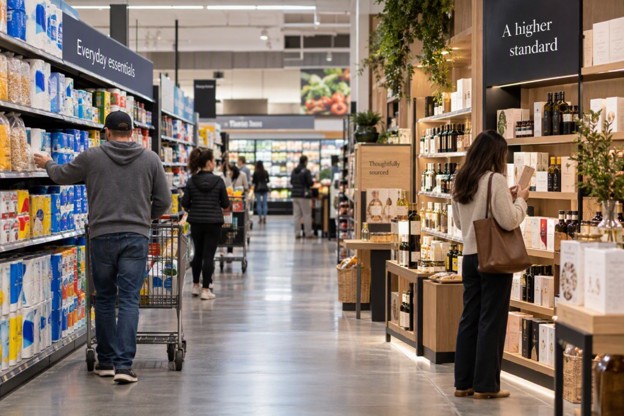
The K-shaped economy is becoming a K-shaped retail market. Upper-income households continue to account for a disproportionate share of spending, while most households place greater emphasis on immediate affordability and cash-flow control. Moreover, that gap is widening according to Nielsen IQ, creating two powerful but increasingly different paths for growth, and makes the middle harder to defend.
The first K appears in merchandising. Private label, opening price points and overt value propositions serve shoppers managing what they spend, and it’s certainly meeting that need: Private label reached a record 23.8% unit share in the first half of 2026. Importantly, investments in quality, packaging, and range across a number of retailer private labels have diminished the perception of a trade-down for shoppers buying private labels. On the other hand, premium and emerging brands serve shoppers focused on what they get: differentiation, discovery, innovation, and experience. According to research published by Bain & Company, only 113 “insurgent brands” drove 36% of category growth in 2025.
The second K appears in retail channels. Dollar and other value formats have benefited from pressure on household budgets, while Club and specialty channels can win with shoppers able to exchange a larger upfront outlay for a greater long-term value proposition. The widening white space between the branches leaves little room for propositions that are neither clearly affordable nor meaningfully distinctive, across brands and retailers. “This bifurcation phenomenon has only become more acute this decade, forcing trading partners to manage two very different shoppers,” Nicholas asserted.
What this means for packaging and merchandising
Packaging and merchandising should make it evident which branch of the K the proposition intends to win so that the shopper can self-identify. At the value end, that can mean clear pack-price architecture and an explicit value message. At the other end, premium packaging, sustainable packaging, elevated graphics and stronger storytelling must make trading up feel worthwhile. The biggest risk is a package that signals neither compelling value nor meaningful distinction.
Smurfit Westrock can help with the distinction through design and innovation services as well as sustainable packaging options.
4. The New National Brand Playbook
National brands are increasingly ceding share in both directions: to private labels that have narrowed the trust and quality gap, and to emerging brands that bring novelty, specialization and relevance. Heritage remains a powerful asset, but heritage alone is no longer a pathway to growth.
The new playbook begins by treating heritage as a platform rather than an anchor. Successful brands will preserve the values and distinctive assets that make them recognizable, then extend that equity into new trends, adjacencies, occasions and media platforms. Relevance must be earned with generations that may have little nostalgic connection to the brand and may first encounter it through a marketplace, creator, social platform or AI recommendation. Heritage can explain why a brand matters; it cannot be the only reason the brand will matter next.
What this means for packaging and merchandising
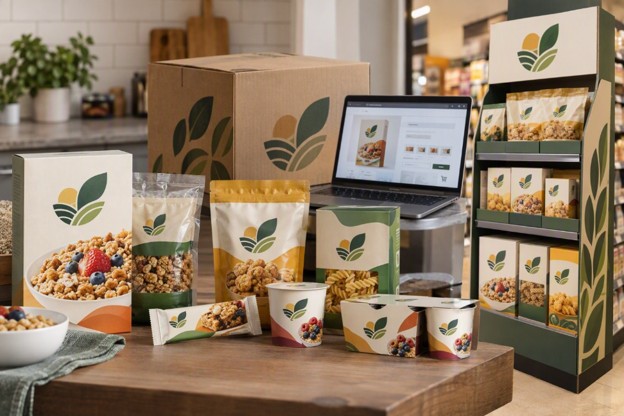
The package is where heritage and reinvention visibly meet. Brands need to preserve recognizable colors, shapes and design equities while leveraging structure, graphics, formats and merchandising to signal contemporary relevance. Retail displays can also place familiar brands into new occasions and adjacencies, showing shoppers not simply what the brand has been, but where it belongs now.
Of course, the balance between the past and future will differ by brand. Smurfit Westrock’s Design and Innovation teams are well equipped to customize each heritage brand’s evolution through our Design2Market rapid development programs.
5. The Big 3...Bigger
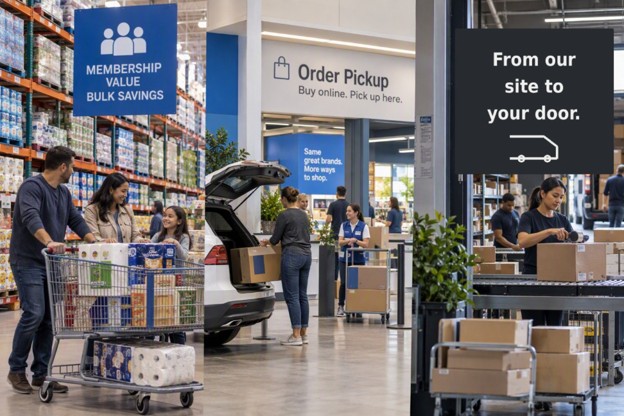
Amazon, Costco and Walmart today generate about 34% of all US retail sales, according to Kantar; remarkably, Kantar forecasts that these three will account for nearly 39% of US retail sales by 2031, accounting for nearly 59% of all US retail growth. Such a concentration of both scale and growth frames the retail ecosystem today and in the future, as “holistic joint business planning efforts encompass a widening proposition to shoppers that these retailers and their suppliers must align on,” according to Nicholas.
But their significance should not obscure their differences. Amazon presents itself as a technology and services ecosystem as much as a retailer. Costco's economics begin with membership fees and a highly edited club model. Walmart is building a multi-sector ecosystem in which advertising, marketplace, membership and fulfillment increasingly complement retail sales and profitability.
All three participate, to differing degrees, in digital platform commerce, membership or relationship commerce, and physical omnichannel commerce. Their centers of gravity are different, however, and that makes a single national playbook increasingly inadequate. As scale concentrates, brands need more distinct, customized and collaborative business planning around assortment, merchandising, media, replenishment, fulfillment and innovation.
What this means for packaging and merchandising
Retailer-specific packaging should be designed around each customer's economics, shopper missions and operating requirements. Branding that focuses on the value proposition; customized retail shelf and display merchandising; and ecommerce protection and omnichannel-ready product configurations will need to be tailored to different retailer business models and branding standards.
Smurfit Westrock’s suite of retail and club store packaging solutions as well as protective and e-commerce solutions are well-suited to these challenges.
6. Holistic Health & Wellness
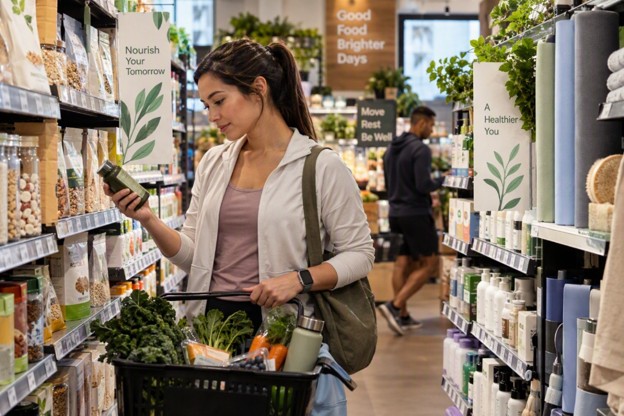
Health and wellness has become ubiquitous and all-encompassing. Mental health, personal care, GLP-1s, protein, fiber, beauty, electronic monitoring devices and AI-driven health agents are less a collection of separate trends than parts of a connected consumer ecosystem. NIQ cites a global wellness economy projected to grow from $6.8 trillion in 2024 to $9.8 trillion in 2029. Wellness, liberally defined, is table stakes.
The implication extends far beyond health and beauty, as evidenced by Walmart’s new Mood & Mind category in beverages. Consumers are evaluating products at the level of ingredients, functions, outcomes and personalized fit, as wellness becomes embedded across more of the store and the omnichannel journey. Moreover, the growth of AI to enable context-specific advice and recommendations has only just begun to alter the health and wellness landscape. The strategic question is no longer whether a category belongs in wellness, but what credible role it can play in a consumer's broader health journey.
What this means for packaging and merchandising
Packaging must help shoppers navigate a crowded wellness landscape with clarity and credibility: what the benefit is, why it matters and for whom the product is appropriate. Merchandising can move beyond traditional category silos by organizing around consumer needs, outcomes and occasions, while connected features and AI linkages can provide deeper information where on-pack space is limited.
Here and elsewhere, Smurfit Westrock’s suite of packaging solutions are well-suited as a starting point for your brand’s health and wellness expression.
7. AI-ification
AI has been woven throughout the first six trends because it is rapidly becoming embedded across the industry and the shopper’s toolkit. For retailers and manufacturers, AI tools are identifying emerging products and trends, optimizing supply chains, informing marketing plans and reshaping category management across assortment, pricing and promotion. On the shopper front, Deloitte reported in July 2026 that more than one-third of shoppers were already using AI to complete purchases.
For shoppers, agentic AI holds the promise of contextualized personalization: what should I buy, from whom and at what price, given my needs right now? That opportunity brings strategic questions. Who controls the narrative? Do brands and retailers risk disintermediation? Which AI agents will shoppers trust (Capgemini found that 76% wanted clear rules governing when an AI shopping assistant acts), and which product sources will the AI agents trust? Are products optimized for agentic discoverability?
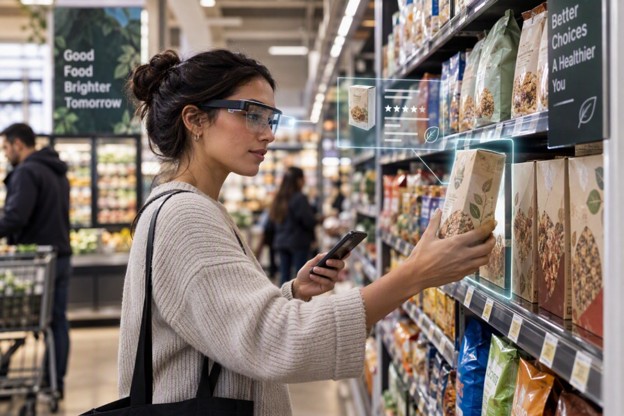
Identification is the prerequisite for recommendation, though. Toward that end, the Universal Commerce Protocol positions itself as employing a common discoverability language across platforms, agents and businesses, supporting discovery, catalog lookup, carts, checkout and orders across chat, visual and voice experiences. Discoverability via agentic engine optimization is thus a prerequisite for determining 'What does the algorithm think?', as the algorithm cannot consider a product it cannot first identify or process. As Leon Nicholas put it, “AI is becoming as important as the shopper’s eyes in driving conversion.”
What this means for packaging and merchandising
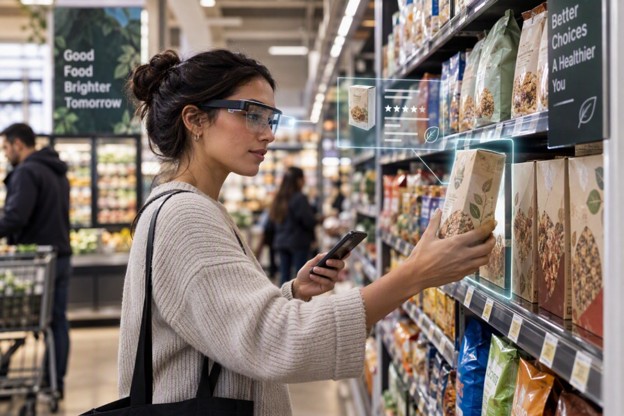
Packaging now needs to serve three forms of discoverability: human discoverability at shelf; online discoverability through structured product information; and visual or machine discoverability through distinctive, recognizable physical cues and smart packaging. Smart glasses and other vision-enabled agents may increasingly read packages and displays alongside the shopper. Packaging must communicate simultaneously with two shoppers: the human making the purchase and the intelligent agent helping make the decision. The role of packaging in the shopper’s journey, therefore, takes on new dimensions.
Smurfit Westrock’s Design and Packaging experts leverage connected and smart packaging solutions in light of the emergence of AI as a visual discovery engine.
The 2027 Moment
The defining features of 2027 retail trends will be built upon the convergence of economic pressures, spending polarization, broader definitions of value and wellness, greater retailer concentration and AI-mediated choice. That convergence will reward companies that can translate complexity into clear decisions for both shoppers and trading partners.
For packaging and merchandising, the mandate is expanding. Solutions still need to protect products, meet ecommerce standards, and convert at shelf. Increasingly, they must also express a precise value proposition, adapt to retailer-specific economics, connect physical and digital experiences, and be recognizable to the algorithms entering the path to purchase. The winners will be distinctive, relevant and discoverable wherever the decision is made.
Trust will likely emerge as a driving variable across winners: among trading partners; among shoppers, brands and retailers; and among all of them and AI interfaces.


Frequently Asked Questions
Our Latest Blogs